The rapid expansion of Artificial Intelligence and cloud computing is driving unprecedented growth in global computational demand and energy consumption. From large-scale data centers to edge devices, researchers at the Institute for Energy Efficiency are developing the next generation of intelligent, energy-efficient computing systems that can sustain the future of AI.
This initiative brings together expertise in artificial intelligence, cloud computing, distributed systems, computer architecture, and photonics to address energy efficiency across the entire AI lifecycle — including model training, inference, data movement, resource allocation, and system monitoring. Researchers are advancing scalable machine learning and reasoning algorithms capable of analyzing massive, complex datasets while reducing computational overhead and energy usage. A key objective is achieving transformative improvements in AI efficiency, with faculty pursuing technologies and methodologies that could deliver orders-of-magnitude reductions in the energy required for AI training and inference. Data movement within and between computing systems has become a major contributor to data center energy consumption. To address this challenge, researchers are leveraging UCSB’s pioneering photonics technologies, including optical interconnects and silicon photonics innovations that have dramatically improved the energy efficiency of communications infrastructure. These technologies have been widely adopted across the computing and networking industries and continue to shape the next generation of high-performance, energy-efficient data center architectures.
At the systems level, faculty are pioneering energy-aware cloud and distributed computing frameworks that optimize performance through virtualization, dynamic resource management, and intelligent workload allocation across computing infrastructures. Researchers also utilize the Institute’s Experimental Data Center, supported through industry partnerships and infrastructure contributions, as a platform for evaluating emerging technologies, AI workloads, and energy optimization strategies under realistic operating conditions. In parallel, new hardware and software monitoring technologies are enabling more efficient, secure, and adaptive computing platforms by identifying performance anomalies and improving system-level energy optimization. Together, these efforts aim to transform how AI systems are designed, deployed, and managed, enabling energy-efficient computing solutions that span from hyperscale cloud infrastructure to resource-constrained edge environments.
Lead Faculty
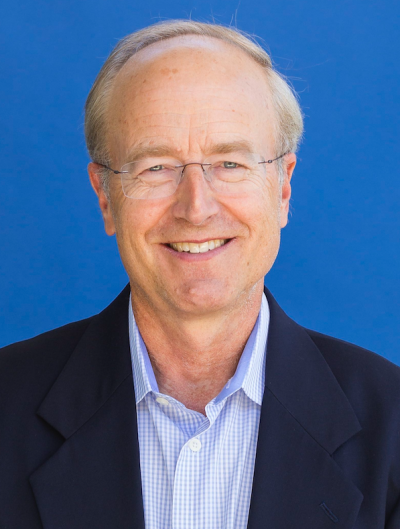
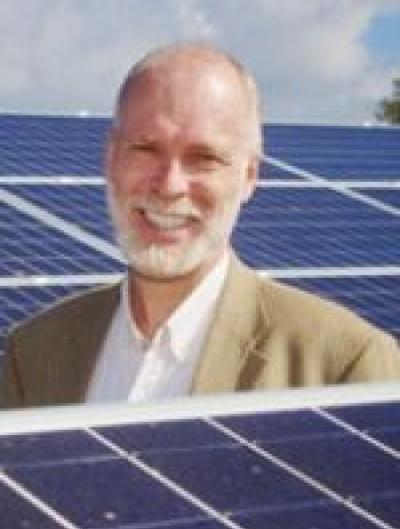
John Bowers: Professor, Electrical & Computer Engineering
John Bowers is interested in energy efficiency and the development of novel low power optoelectronic devices for the next generation of optical networks. His research interests include silicon photonics and integrated circuits, fiber optic networks, thermoelectrics, high efficiency solar cells, and optical switching. Optical switches have the potential to reduce the energy required to switch data by factor of 10,000. Silicon photonics have the potential to reduce the energy require to transmit data on and off chips by a factor of ten or more. A recent collaboration with Intel led to the development of hybrid silicon lasers, which led to a prototype 50 Gbps high-speed optical data link, which is integrated onto silicon.

Steven DenBaars: IEE Director, Professor, Electrical & Computer Engineering
Professor DenBaars is a longstanding member of IEE, and since 2005 has served as IEE Thrust Leader for Display Solutions Group. He is our Mitsubishi Distinguished Professor, with faculty appointments in Materials and Electrical & Computer Engineering, and is the Executive Director of our Solid State Lighting and Energy Electronics Center. He is a member of the National Academy of Engineering and a fellow of the National Academy of Investors, with more than 1,400 publications and over 153 patents filled. DenBaars has a deep commitment to advancing sustainable energy solutions. Drawing on his experience in solid-state materials for lighting, displays, and power electronics, he is eager to contribute to IEE's mission of driving innovation in energy efficiency.
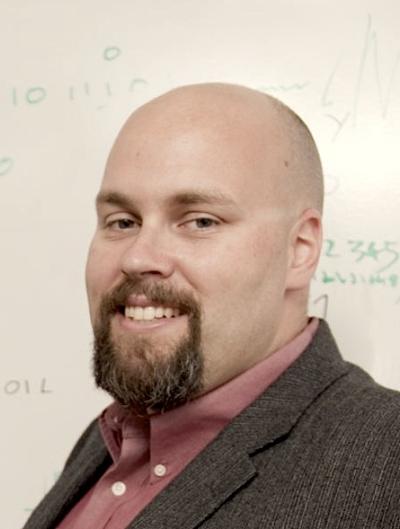
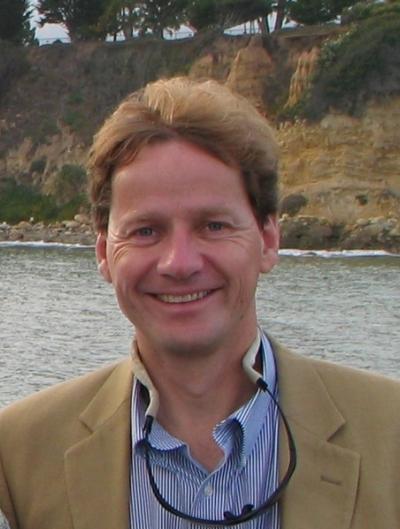
Timothy Sherwood: Associate Professor, Computer Science
Timothy Sherwood's research is in the area of computer architecture, specifically in the development of novel high throughput hardware and software methods by which systems can be monitored and analyzed. Such techniques provide a powerful new way to inspect and control the digital world: they shed light on energy efficiency and performance anomalies, uncover software bugs, and help secure critical systems against attack.

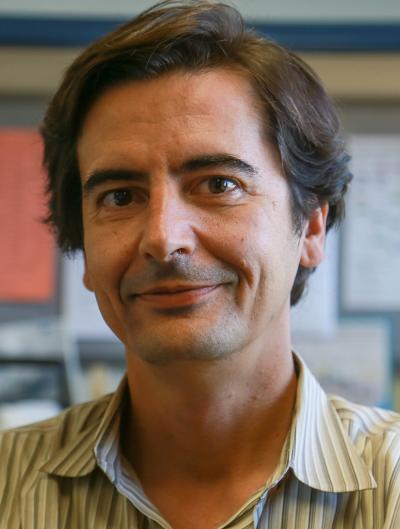
Xin (Eric) Wang: Assistant Professor, Computer Science
Wang aims to build intelligent multimodal AI agents that can understand the world, collaborate with humans, and perform real-world tasks—from everyday activities to high-stakes missions. His work spans multimodal representation learning, embodied AI for human-agent collaboration, and the ethical design of trustworthy AI systems. Drawing on methodologies from machine learning, computer vision, natural language processing, and robotics—with insights from cognitive science and neuroscience—his research develops generalizable, efficient, and socially responsible agents that perceive, communicate, and act in complex environments.

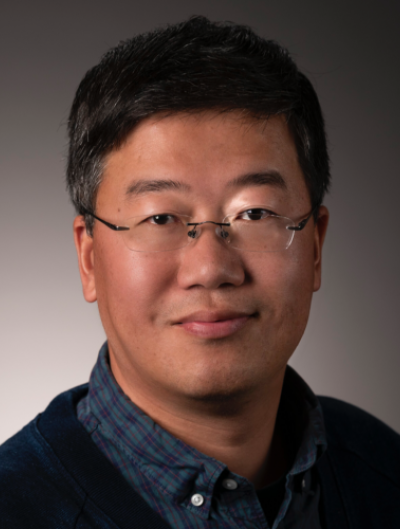
Richard Wolski: Professor, Computer Science
Richard Wolski’s research interests include cloud computing, computational grid computing for performance, and parallel and distributed systems. He works with the Greenscale Center for Energy-Efficient Computing to restructure computations to be more energy aware through virtualization technology: a powerful tool with which to migrate and consolidate computations when used in conjunction with models and control of cooling technologies. Other recent endeavors include Eucalyptus: an open-source implementation of cloud computing that can emulate Amazon's EC2 on your own resources (commercialized as Eucalyptus Systems, Inc.); the Network Weather Service: a distributed system that periodically monitors and dynamically forecasts the performance that various network and computational resources can deliver over a given time interval; EveryWare: a toolkit for building high-performance globally distributed programs; and G-Commerce: market-based resource allocation strategies for the grid.
Industry Leaders