As demand for computing, connectivity, and data transfer continues to grow, advances in photonics and electronics are essential for enabling faster, more energy-efficient information technologies. Researchers at the Institute for Energy Efficiency are developing next-generation electronic and photonic systems that reduce the energy required to process, transmit, and manage data across computing and communication platforms.
This research focuses on integrated photonic and electronic technologies that improve performance while reducing power consumption, size, and system complexity. Faculty are advancing silicon photonics, microLED technologies, and optical interconnects that provide higher bandwidth, lower latency, and lower energy consumption than conventional electrical wiring. Researchers are also developing photonic integrated circuits, hybrid silicon photonics platforms, and optical networking technologies capable of supporting terabit- and multi-terabit-scale communications.
Additional efforts include quantum dot lasers, nonlinear photonic devices, integrated light sources, and advanced semiconductor technologies such as high-performance transistors and wide-bandgap materials. Together, these innovations support more energy-efficient computing, communications, transportation, and quantum technologies while laying the foundation for future scalable information infrastructure.
Lead Faculty

Steven DenBaars: IEE Director, Professor, Electrical & Computer Engineering
Professor DenBaars is a longstanding member of IEE, and since 2005 has served as IEE Thrust Leader for Display Solutions Group. He is our Mitsubishi Distinguished Professor, with faculty appointments in Materials and Electrical & Computer Engineering, and is the Executive Director of our Solid State Lighting and Energy Electronics Center. He is a member of the National Academy of Engineering and a fellow of the National Academy of Investors, with more than 1,400 publications and over 153 patents filled. DenBaars has a deep commitment to advancing sustainable energy solutions. Drawing on his experience in solid-state materials for lighting, displays, and power electronics, he is eager to contribute to IEE's mission of driving innovation in energy efficiency.
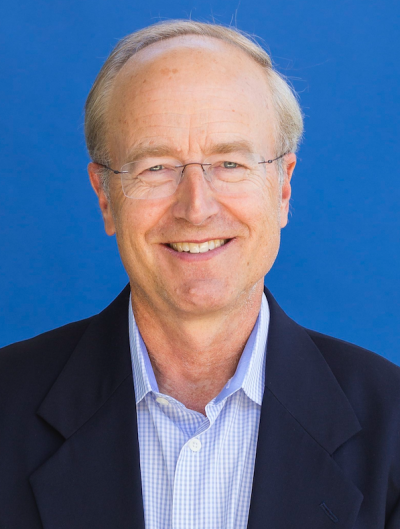
John Bowers: Professor, Electrical & Computer Engineering
John Bowers is interested in energy efficiency and the development of novel low power optoelectronic devices for the next generation of optical networks. His research interests include silicon photonics and integrated circuits, fiber optic networks, thermoelectrics, high efficiency solar cells, and optical switching. Optical switches have the potential to reduce the energy required to switch data by factor of 10,000. Silicon photonics have the potential to reduce the energy require to transmit data on and off chips by a factor of ten or more. A recent collaboration with Intel led to the development of hybrid silicon lasers, which led to a prototype 50 Gbps high-speed optical data link, which is integrated onto silicon.

